

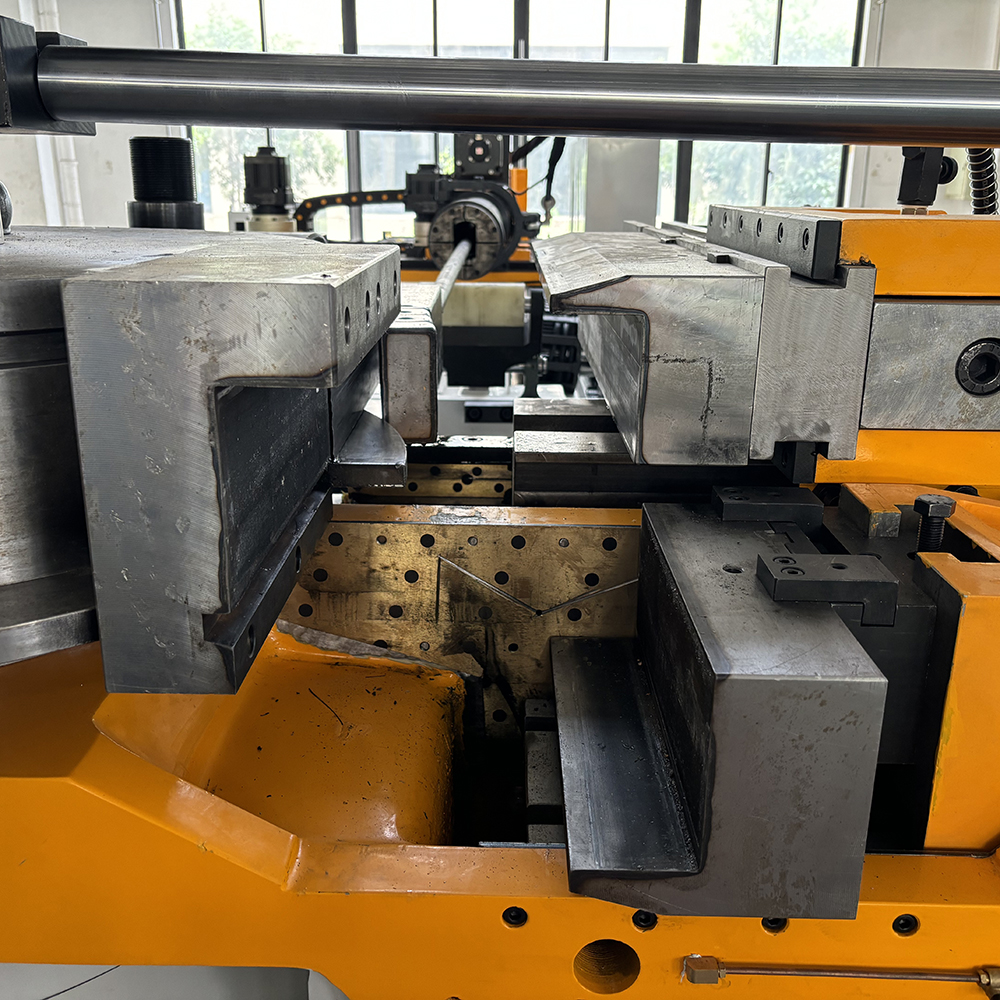
Four Core Causes of Tube Bending Wrinkles

To solve the wrinkling problem, it is first necessary to find specific places and causes of the defect. Wrinkles are typically seen on the inner radius or sidewalls of the bend. The common causes are grouped into four main factors

Die Force or Tooling Clearance Too Much Pressure

Analysis:

①Insufficient pressure. When push bending or rotary draw bending is carried out, if the booster force or the clamping pressure of the pressure die is too low, the tube will not be tightly fitted to the tooling during the bend, so that the material will bulge and wrinkle.

② Excessive Clearance: The gap between the wiper die, clamp die and tube is too large and allows the tube to be freely deformed without controlled stress.

Incorrect Material and Wall Thickness

Analysis: Thin walled tubes (high D/t) have low inherent rigidity and are susceptible to buckling and wrinkling under compressive stress. Besides, the probability for wrinkling during deformation increases with high elongation of the material or low yield strength .

Radius of Bend Too Small

Analysis: When the design bending radius is too tight (e.g. < 1.5 x OD), the compressive stress on the inner radius will increase rapidly. The material does not flow easily and conform to the change in short distance causing the excess metal to build up and wrinkle.

Tailor-made solutions and operation optimization

The following physical changes and process optimizations are available to overcome the causes of wrinkling above:

Adjust/Replace Mandrel: Check the mandrel position to be exactly at the bend tangent point. For thin wall or high precision applications, a multi-ball mandrel is recommended for continuous smooth internal support.

Increase tooling pressure. Adjust the pressure die clamp force as required to equalise the stress in the bend. Be sure the tooling is tight on the outside diameter of the tube and inspect it frequently for wear.

Booster Features: Control booster speeds and power for CNC tube benders. The forward boost cancels the compressive stress in the inner radius and removes the wrinkles.

Optimize process parameters and lubrication. Use high quality lubricants to reduce the coefficient of friction between the tooling and the tube to allow easier flow of the material. Pre-anneal high hardness or special materials if required.

Phone: +86 189 6229 6262
Website: www.hsformer.com
Email: heshun@heshunjx.com

Best Regards

The Team at Zhangjiagang Heshun Machinery Co., Ltd.

Related Blog

What Is Mandrel Bending?

What Is Mandrel Bending?

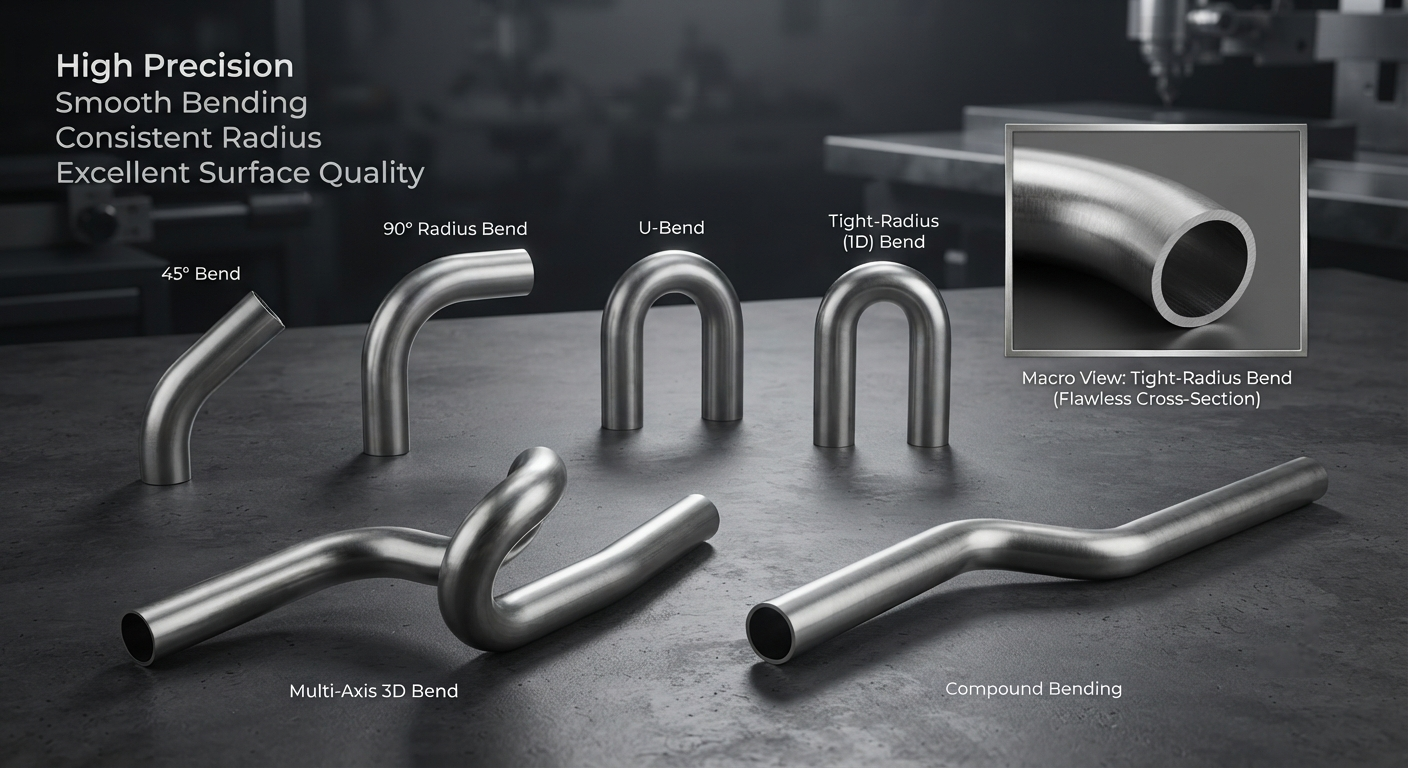
Mandrel bending is a precise tube bending process that uses an internal mandrel to support the tube during the bending operation. It reduces wrinkling, flattening and ovality and is therefore ideal for thin-wall tubes and tight radius bends.

Mandrel bending is common in automotive, aerospace, HVAC, furniture and industrial applications.
Read More »
What Is Rotary Draw Bending?

What Is Rotary Draw Bending?

Among the modern manufacturing methods for tube bending, rotary draw bending (RDB) is one of the most accurate and most widely used. It is commonly used to make high quality bends in stainless steel, aluminum, carbon steel and copper tubing. Rotary draw bending is widely used in the automotive, aerospace, furniture, HVAC and medical equipment industries due to its excellent precision and repeatability.

Read More »