

What Is Rotary Draw Bending?

Among the modern manufacturing methods for tube bending, rotary draw bending (RDB) is one of the most accurate and most widely used. It is commonly used to make high quality bends in stainless steel, aluminum, carbon steel and copper tubing. Rotary draw bending is widely used in the automotive, aerospace, furniture, HVAC and medical equipment industries due to its excellent precision and repeatability.

What Is Rotary Draw Bending?

Rotary Draw Bending Explained

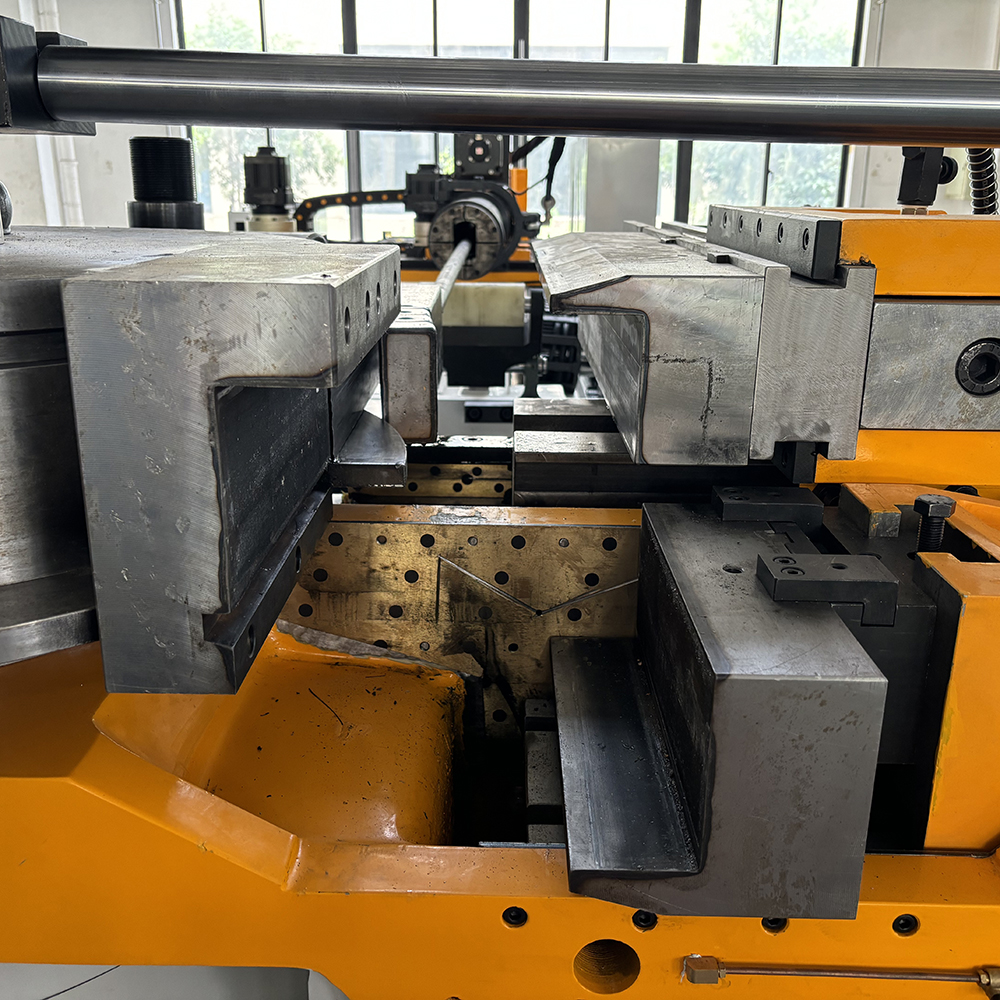
Rotary draw bending is the tube forming process by clamping the tube rigidly to a rotate bend die. The bend die then rotates and pulls the pipe around a fixed radius to form a smooth, accurate bend.

When the tube is bent, further tooling, such as a mandrel, pressure die and wiper die, may be incorporated to maintain the shape of the tube. They are employed to prevent defects such as wrinkling, flattening, over-deformation, especially when bending thin-wall tubes.

The controlled bending process allows manufacturers to obtain tight bend radii with good quality and high dimensional accuracy.

Benefits of Rotary Draw Bending

These are the main advantages of rotary draw bending, the preferred method for precision tube fabrication:

high accuracy – delivers bend angles and radii with high repeatability consistently.

Excellent Surface Finish – Reduces scratches and maintains a clean tube finish.

Less deformation – Good tooling design can prevent wrinkling, flattening and ovality.

Ideal for Complex Parts – Great for 3D tube and multi-bend parts.

CNC Automation – Smooth integration with CNC tube benders for efficient mass production.

Draw Bending Rotary Disadvantages

Rotary draw bending is a very efficient process but has limitations.

Higher prices for machines and tooling compared to simple bending processes.

Different tube sizes and bend radii require special tooling.

For small runs the setup time might be longer.

Regular maintenance of the tooling is needed to ensure consistent bending quality.

But for manufacturers who need to be precise and repeatable, the initial cost often pays itself back in the long run.

Applications Common

ndustries due to its precision and versatility.

Automotive: Exhaust systems, fuel lines, brake tubes, seat frames.

Aerospace: Hydraulic tubing, structural tubing and aircraft parts

Furniture: Chair frames, tables and frames of metal furniture.

HVAC: Air conditioning pipe and heat exchange tubing.

Medical equipment: hospital beds, wheelchairs and frames for medical devices

Industrial Equipment: Handrails, structural tubing, machine frames.

Conclusions

Rotary Draw Bending is one of the most precise and reliable tube bending processes used today. The process uses a combination of precision tooling and machine motion control to create quality bends with minimal tube deformation.

Whether you are making automotive parts, furniture, aerospace components, or industrial equipment, rotary draw bending offers the precision, repeatability and speed required for today’s manufacturing. For companies requiring high performance tube fabrication, a CNC rotary draw bending machine is a good investment.

Phone: +86 189 6229 6262
Website: www.hsformer.com
Email: heshun@heshunjx.com

Best Regards

The Team at Zhangjiagang Heshun Machinery Co., Ltd.

Related Blog

What Is Mandrel Bending?

What Is Mandrel Bending?

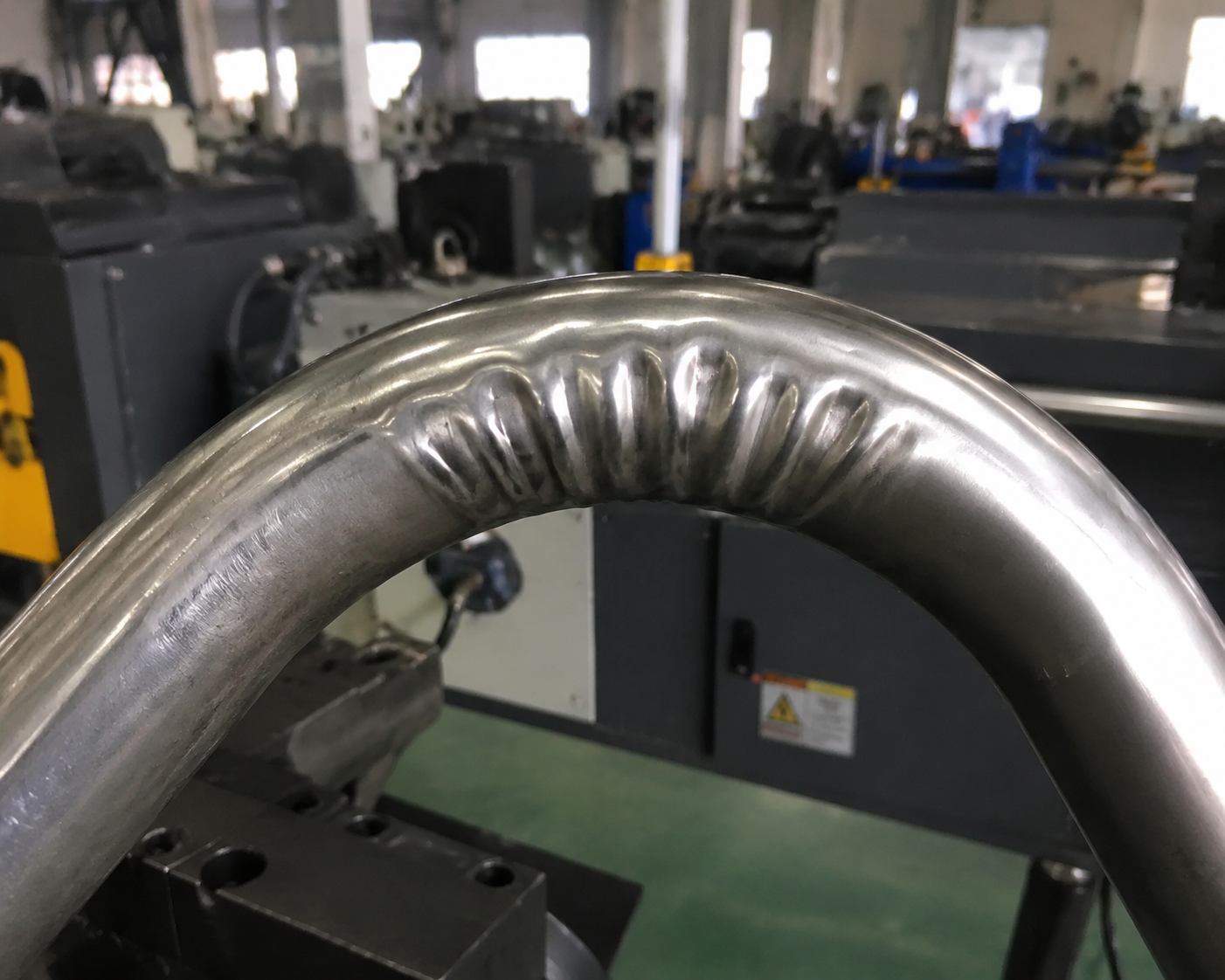
Mandrel bending is a precise tube bending process that uses an internal mandrel to support the tube during the bending operation. It reduces wrinkling, flattening and ovality and is therefore ideal for thin-wall tubes and tight radius bends.

Mandrel bending is common in automotive, aerospace, HVAC, furniture and industrial applications.
Read More »